Authority

Authority comes from the root word author.

When someone has authority over us, they can author parts of our story.

It’s like they have the pen. At least some of the time.

And vice verse when we have authority over others.

It’s a powerful thing to contribute to someone’s story.

What will we write?

But in more cases than we’d probably care to think, authority is ours to give away.

We have more choice than we realise as to who’s holding the pen.

So who’s co-authoring our story?

Our family of origin?

Our culture?

Our silos of choice?

And in some cases, our bosses?

As Seth Godin once said when referring to bosses…. that would be you.

Me.

Us.

Let’s decide not to become the victim of living a mediocre story because we’ve tricked ourselves into thinking we don’t hold the pen.

Victor Frankl says it best:

“Everything can be taken from a man but one thing: the last of the human freedoms — to choose one’s attitude in any given set of circumstances, to choose one’s own way.”

Abundance: a surfer’s perspective

“To drop in on someone”: To take off on a wave that is already being ridden. Not a legitimate technique or maneuver. It is a serious breach of surfing etiquette.

What worldview or mindset would possess a surfer to drop in on someone else?

Scarcity?

“There’s not going to be another wave like this, so I’ll do whatever it takes to get it for myself.”

The ocean doesn’t seem to be running out of waves.

And even if it’s not ideal swell today, there’s certainly a day coming where it’ll pick up again.

Selfishness?

“Sure, there’ll be more waves like this. But this one’s still mine.”

Left alone, selfishness eventually isolates you from community.

And ultimately, in some strange way even isolated from yourself.

Individualism?

“I had the most amazing surf today!”

What if it was all about our collective surfing experience instead?

How many great waves we caught vs my personal experience or KPI of pleasure / happiness / [insert whatever metric you like].

That way, even when we’re not on a wave ourselves, we’re sitting by, watching on, experiencing the joy vicariously through another.

Abundance.

Generosity.

The collective.

Seeing the world through frames like this makes for a better experience overall.

I’m curious about the change we’d see if we viewed our family life, friendships, vocational pursuits and politics through these lenses instead.

A diversified portfolio (of time)

A while back I reflected on how people are our biggest assets, and the currency we have to invest in them is our time.

I’ve been thinking about that some more this week in the context of the principle of diversification.

A diversified investment portfolio is one that maximises return while minimising risk.

So as we invest/inject/deposit our time into these human assets, how are we thinking about spreading that time around?

What withdrawals of our time could be made from some areas for a more effective reinvestment elsewhere?

How has the pandemic changed the way this portfolio of human assets and weighting of our time looks?

And do how we see ourselves in this portfolio of human assets?

How much time do we invest in ourselves?

What about our loved ones? Our kids? Our friends?

I guess the holistic make-up of this portfolio – both in terms of the people and weighting of time – depends on how we define risk and return.

So how do you define it?

Luck = x% showing up

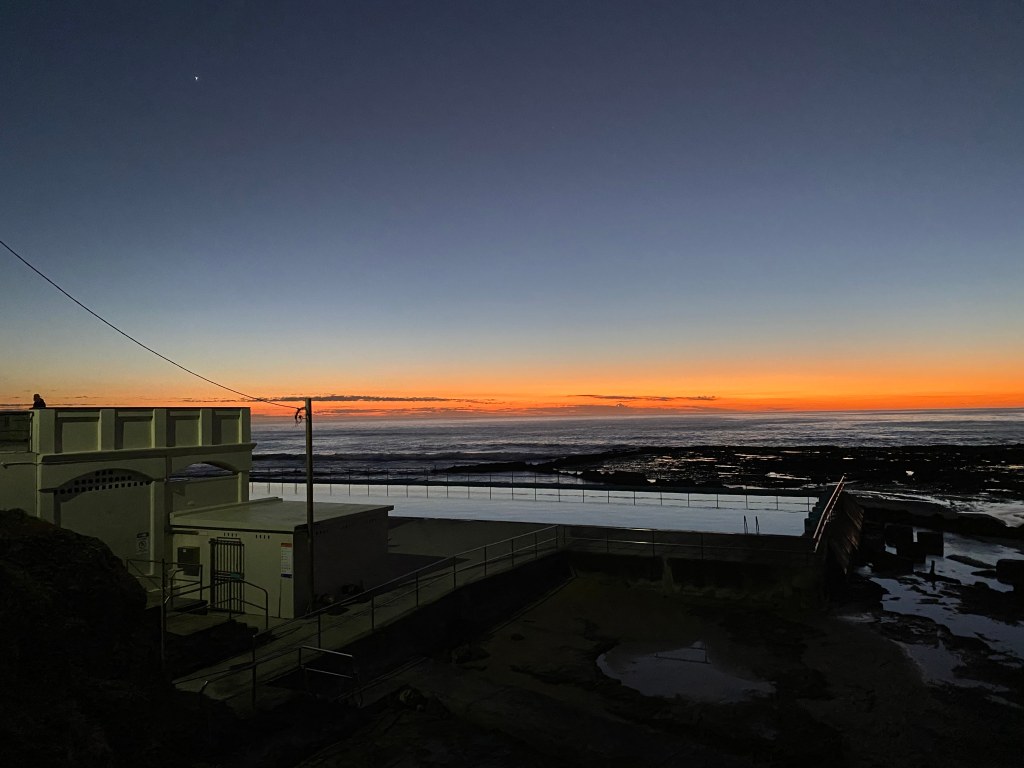
It’s 6am. I’m watching two surfers paddling out into the freezing cold water to catch a few waves before they head off to work. 

The conditions are perfect and they’re having a blast. They’ve got it all to themselves. 

How lucky!

Well, not really. 

I heard a friend say once that luck is what happens when preparation meets opportunity

Preparation: 

  • learn to surf
  • keep practising 
  • develop the discipline to get up early
  • create a life system with enough space for a morning surf
  • be consistent 

These points have nothing to do with luck. 

They’re postures. 

A way of showing up.

I wonder what percentage of luck comes down to showing up?

And I don’t mean showing up late. Or showing up without the proper training and preparation. 

Showing up optimised. 

The sun is has risen a little more, and two more surfers have just turned up. They’re absolutely loving it!

I read a brilliant article from Michael Batko recently where he reflected on people who associate luck with lightening striking.  

His response? 

“Increase your surface area so it’s more likely to strike you!”

Brilliant. 

What does it look like to show up consistently, with increased surface area, such that the lucky break you’re looking for is more likely to find you?

Where do these kinds opportunities hang out? And how could you spend more time there?

Beyond the breakers

Sometimes, making change happen is like trying to get out beyond the breakers when there’s big swell.

You can try and go over the wave. Or even worse, attempt to dive head on straight into it!

But best to dive under the wave and stay out of its’ path.

Either way, just as you resurface from navigating the first wave, you pop up for air and another one appears straight away.

Swim out to meet it, dive under, come for air.

Swim a little further, dive under, come up for air.

Repeat. Repeat.

How long can this last?!? It’s exhausting! It feels like you’re making no progress and wearing yourself out in the process.

What would it look like to conserve energy while you wait for these big sets of waves to finish.

Is there a rhythm to adopt?

What would it look like to enjoy it, rather than resist the way things are?

Because you can’t control the waves.

But you can control how you engage with them.

Perhaps treading water between the waves is enough?

Or you can always catch one into the beach, watch from a safe distance, then head back out when it makes sense to try again.

And now that you think of it, what was it exactly you were going to do when you arrived beyond the breakers anyway?

Float and relax?

Do the current weather conditions mean you should consider relaxing somewhere else?

Like on the sand, in the sun?

How does your sound system sound?

Over the last couple of months, some friends and I have been really curious about this concept of empty space in design.

In architecture, the empty space between two objects is super important.

For instance, in those old Greek buildings like the Parthenon, the space between each of those magnificent columns matters.

Too many columns? Too busy.

Too few columns? Not busy enough.

Space that’s deliberately left unfilled matters.

It’s true with the space between each tree in your favourite park.

Or think about the width of the margins and gaps between each line in the latest book you’ve read. Getting this white space wrong is almost enough to make you put the book down!

And it’s especially true in music.

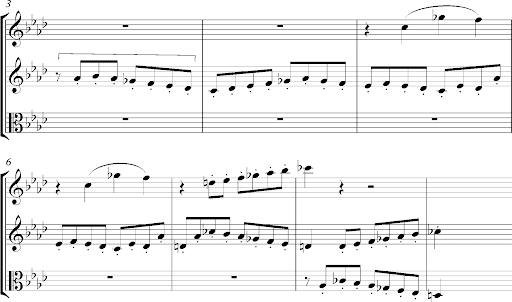
The rests between the notes matter. Their presence amplifies and completes the sound that was just made.

In fact, the rests are so important in music that they have their own symbols!

My friend Michael shared that in Japanese, they have the word Ma to describe the importance of empty space. It’s more than simply a gap, and refers to intentional negative space.

All of this connects to what I wrote last week about reflections on life as a system.

What about life as a sound system?

If my life was written in musical notation and put onto a page for someone to play, how would it sound?

I’d imagine that most of the time, there wouldn’t be enough rests – intentional empty space to complete the overall sound that’s being made.

These reflections took me back to a great podcast by Rob Bell called Mehuha, a Jewish word connected the the rest rhythm built into creation and the creative process. I love his reflections on the way our week of work (aka creating) isn’t complete until we rest.

And not resting to catch our breath for the next sprint on Monday. Instead, reframing rest with the same intent, priority and intensity that we had in our work. Resting to complete the sound we’ve made.

(I’m now picturing a musician resting between notes, and breathing. Hmmm…)

I believe all of this connects to our life as a system, and has a huge impact on the change we’re making in ourselves and the world.

And i’m aware that ignoring this truth makes the environment our life is contained in far less conducive to creating the sound we’re after.

So what’s your sound system like?

How can some intentional rests throughout your day, week and year amplify the sound you’re making?
Life as a System

“You don’t rise to the level of your goals, you fall to the level of your systems.”

⁃ James Clear, Atomic Habits

At the start of 2020 I set a goal to write in this blog publicly each day. Then after a month, I scaled it back to one each week, which felt more sustainable.

(It’s such a me thing to set a lofty goal then have to scale it back…. hmmm, makes me curious…..)

Then came the pandemic, and I haven’t written publicly in 3 months!

I’ve got a long list of excuses…

Our six kids doing school online at home for six weeks throughout April/May.

Teaching part-time maths from home via zoom.

And trying to navigate what all this meant for Forever Projects as the dust slowly settled.

But as the quote from Atomic Habits so clearly lays out – the real obstacle to any goal is the system that it exists in.

You may have a goal to throw a ball 50m in the air, but the system you’re in (gravity!) will be an obstacle to your goal.

That’s true of a goal to write a blog, be a good parent, eat healthy food….. anything.

So as we kick off into the second half of this crazy year, I’m increasingly curious about the systems and environments I’m in that prevent potential energy converting to kinetic.

What’s stopping the movement I’m interested in seeing in my life and the world?

It’s pretty easy to look externally at systems and circumstances and point the finger at why the change you care about didn’t happen.

But having gone back through some notes I made from reading Atomic Habits at the start of the year, i’m more interested in starting internally, with my own life system.

Because no matter which external system or environment I find myself in, there I am with my own individual life system.

The common denominator.

So I’m reflecting on what this life system of mine looks like.

How does it sound?

And how is it designed to sound?

Safaris. Seasons. Tunnel vision.

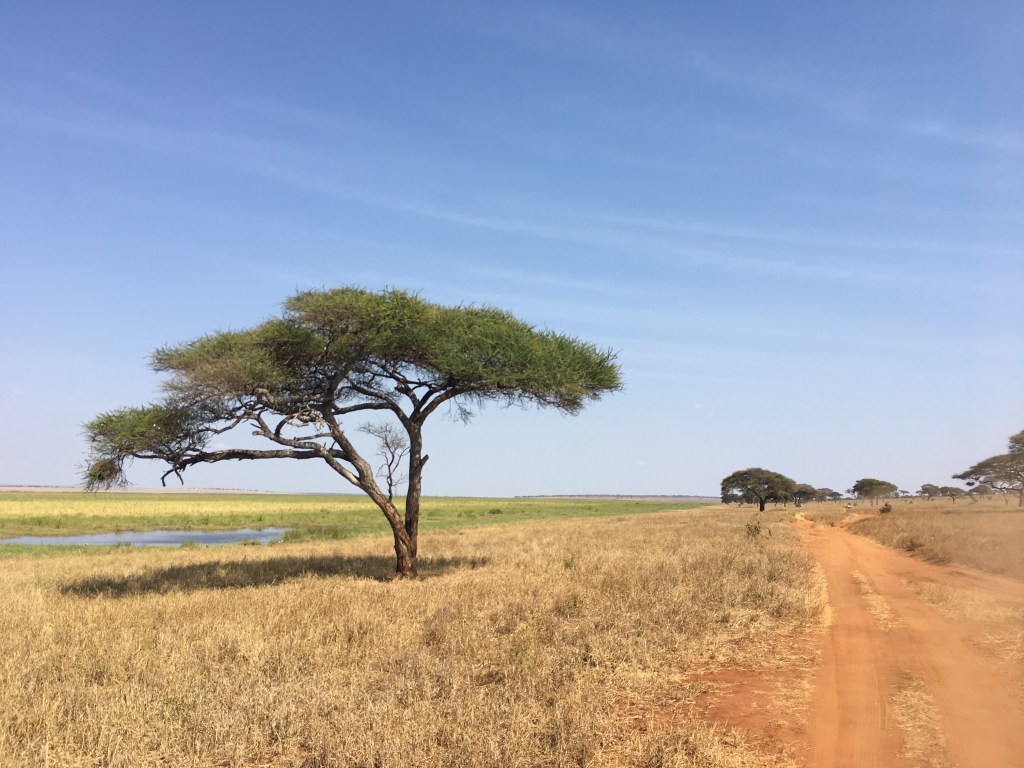
Last year we had the privilege of returning to Tanzania for 6 weeks with our whole family. Among so many other things, we spent some time on safari in Tarangire National Park.

Our favourite moment of each day was definitely the afternoon game drive. 

All eight of us would pile into the open top 4×4 and drive around the park for hours, open to spontaneity and without agenda. 

You have to constantly pinch yourself at the richness of life all around, as you watch the sun slowly set over the rift valley, marvel at the immense beauty on display everywhere you look, try as best you can to follow the bumpy dirt track, all the while keeping an eye out for animals. Especially the elusive leopard!

Having visited this park countless times while we lived in Tanzania, it always strikes me how different it looks depending on the season.

Including the roads.

In the wet season, the grass is long, the animals can hide more easily, and the path ahead of you isn’t always clear. Or even solid ground! More on the time Anna and her friend got bogged for hours in another post….

But over time, the season changes. The long grass eventually submits to the increasingly harsh, dry conditions, and countless more tracks present themselves.

All of a sudden, you don’t need to be as dependent on one single path.

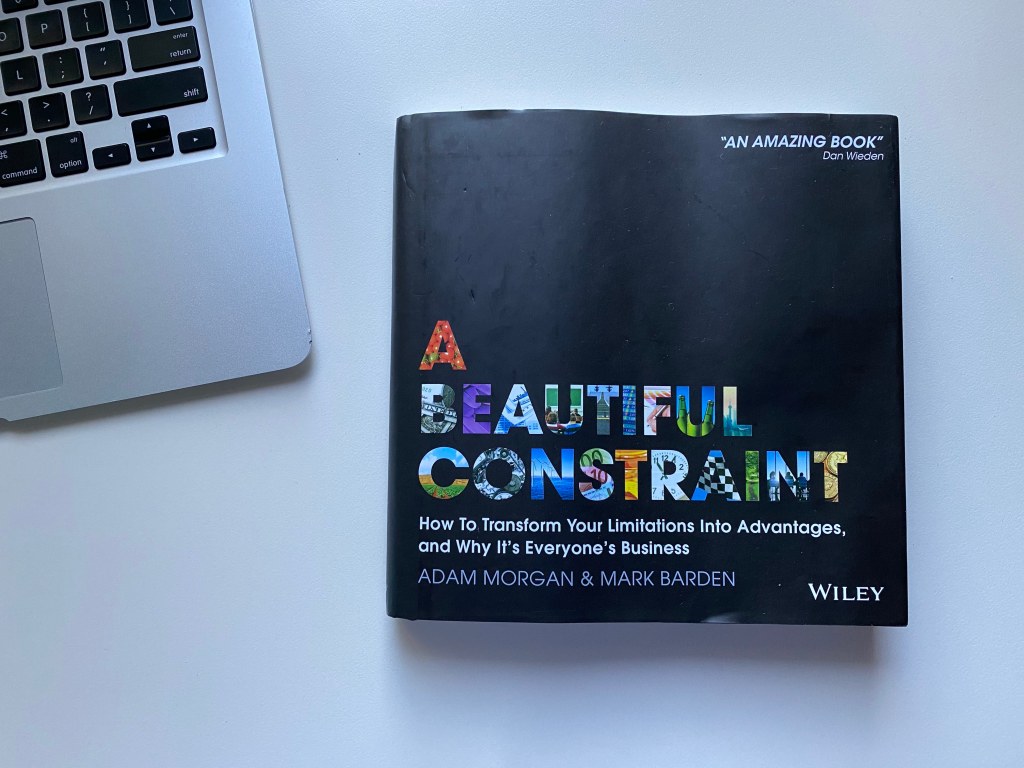
As i’ve continued reading through A Beautiful Constraint, this season we’re all in right now is reminding me of this principle.

Whether we like it to not, our decision to consciously or unconsciously depend on a particular path needs to be reconsidered. 

This constraint we’re all feeling is forcing us to look for alternative ways forward. And as I said in my post last week, the way we show up (either as a victim, or a transformer) will hugely influence our ability to see clearly as we chart our way through this.

Which old roads are you still clinging on to, despite the myriad of new paths and possibilities that this new moment has presented to you?

Transformers (the non-robot kind)

“Look for the gift. There always is one!”

These are the wise and hopeful words of a good friend of mine, Paul, as we were discussing the implications Covid-19 was going to have.

Looking back on that now, what strikes me is that he wrote these words to me mid March… right when the initial hysteria was setting in here in Australia.

Of course, this isn’t to downplay the absolute tragedy that continues to unfold globally every day.

It’s more about posture. How we choose to show up despite the adversity we’re faced with.

Paul is in the creative industry, and has every right to put up the white flag, pressing pause on his vision for 2020, and finding people to console him with sympathy as a victim of the pandemic.

In fact, he’s responded in the exact opposite way. Refusing to use this moment as an excuse, he’s looking for the gift.

And sometimes, when we’re brave enough to look, we’re surprised at what we find.

There’s a really challenging chapter in A Beautiful Constraint about victims and transformers.

The authors first describe a victim:

Someone who lowers their ambition when faced with a constraint.

In contrast, they paint the picture of a transformer:

Someone who finds a way to use a constraint as an opportunity, possibly even increasing their ambition along the way.

I want to be a transformer… like Optimus Prime, where there’s more than meets the eye!

So these are the questions i’m asking myself right now:

First looking inward…..

What change did you set out to make in 2020?

How is this still possible?

Where do you need to look to find the gift?

Where is the opportunity?

Second, to my environment…..

Who are you spending time with that is offering consolation and sympathy?

Who could you be spending time with instead that begin with empathy……

…… but take you to a place of possibility?

The beauty within a constraint

It’s been a year since I first started coaching with Seth Godin’s altMBA. This opportunity followed directly out of my time as a student… literally the month before!

We’ve all experienced those times in our life where immense change can happen so quickly.

Where the usual constraint of a relatively brief window of time doesn’t get in the way of profound transformation.

There is beauty to be had within constraints, to be sure.

The book A Beautiful Constraint was one of the recommended readings in the lead up to the altMBA.

One of about 10 books you were sent the week before!

It’s impossible to read all of those books in that time…. but that’s the point! Where’s the beauty to be found there?

The whole altMBA program is designed to change the way you see. To deconstruct any unhelpful limitations you’re putting on yourself and others, and to widen your frame of possibility.

I love the introductory story in A Beautiful Constraint about Mick Jagger.

Limited by the small space afforded by cramped stages and tiny music venues from the Rolling Stones’ early days, Jagger refused to become a creative victim. He innovated and learned to work his magic without a runway to work with, developing dance moves that would eventually define him.

This story so powerfully illustrates the beauty within constraints that are available to all of us when we choose to look for them.

If we can learn to see.

Even as i’m writing, i’m thinking back to my reflections in last week’s post about the constraints of our years living in Tanzania. And how it was there, in the margins of infrequent spare time, that the origins of Forever Projects can be found.

Those years of what at the time seemed like limitations, have profoundly shaped me as a person.

This is an encouraging reminder for me in our present moment. I refuse to allow physical space and social isolation constrain our ambition to increase our impact on the Tanzanian families we serve. Even in a time like this.

Especially in a time like this.

I’d already put A Beautiful Constraint on my to re-read list for 2020. But the current season we’re in with Covid-19 brought it right to the top.

I plan to share my takeaways here as I work through it again, chapter by chapter.

And as I get prepare to coach my 3rd session of altMBA next week, i’m super grateful for the Akimbo community. Seth and the whole team are leading the way in this moment, having already pivoted effectively towards creating remarkable human AND digital spaces where people can learn to level up.

When you’ve acted ‘as if’ before the disruption has occurred, and voluntarily applied constraints to your organisation to foster a culture of innovation, you’ve certainly got my vote as an established authority in this new world we’re quickly finding ourselves in.